Box Truck
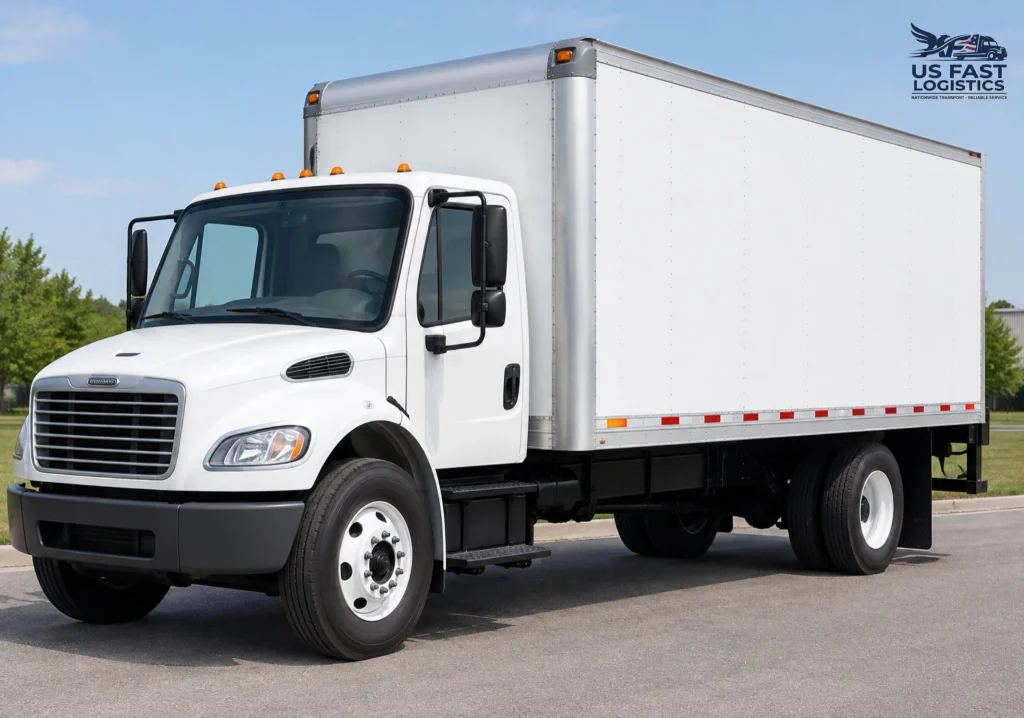
Not every load needs a 53-foot trailer. A lot of American freight is six pallets of flooring going across town, a restaurant’s weekly produce order, or a single machine part a factory needs before the night shift. That is the work a box truck does best, and it is why box truck freight has become one of the busiest corners of US trucking.
We’ll tell you how box truck freight services work, which box truck size fits which load, and what to check before you book a carrier.
What is a box truck freight service?
A box truck freight service moves boxed or palletized goods in a straight truck, where the enclosed cargo area sits on the same frame as the cab. The truck picks up at the shipper’s door, usually carries one customer’s freight, and delivers directly without passing through a terminal.
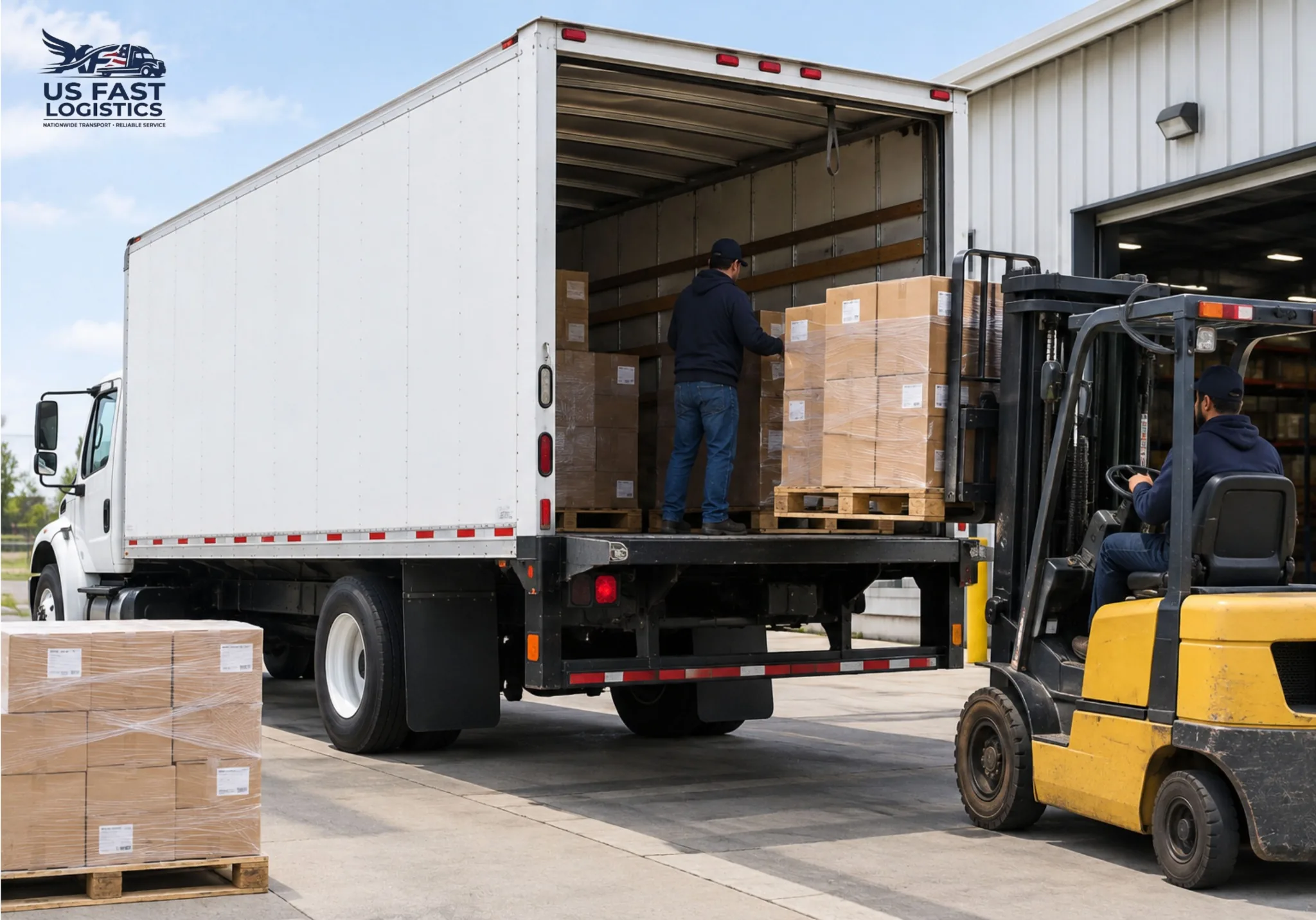
You will hear the same vehicle called a box cargo truck, a straight truck, or a cube truck. The names change by region, but the idea is the same: a rigid truck with a rectangular cargo box, a roll-up rear door, and often a liftgate. Lengths run from about 10 feet up to 26 feet.
In practice, a box truck sits between a cargo van and a tractor-trailer. It carries far more than a van, yet it can still back into a strip-mall loading zone or a residential driveway where a semi simply cannot go.
Why shippers choose a box truck?
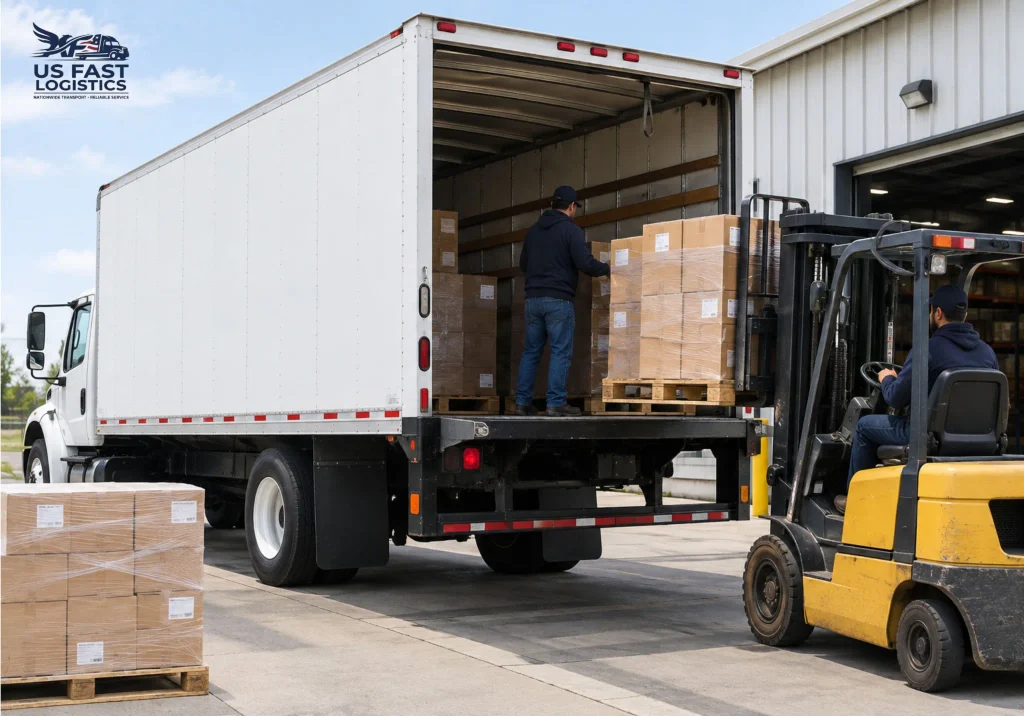
Shippers choose a box truck when the load is too big for a van, too small to justify a full trailer, and too time-sensitive or fragile for a shared LTL network. Four reasons come up again and again.
- Direct delivery. The freight stays on one truck from pickup to drop-off. Fewer touches means fewer damage claims and a delivery time you can actually plan around.
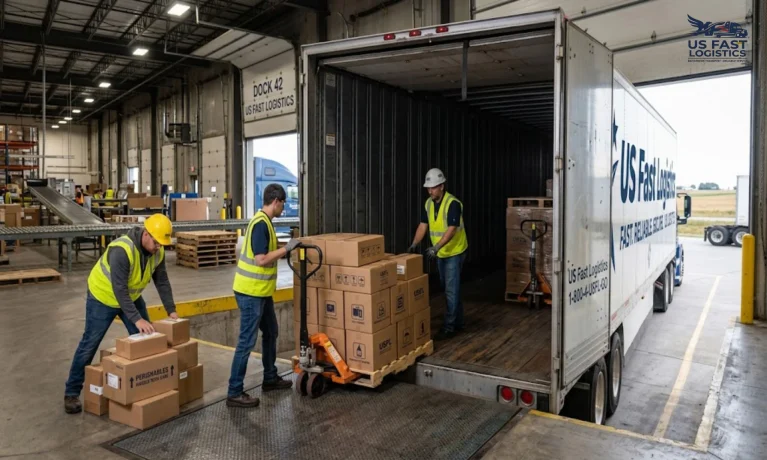
- Access. A box truck fits downtown streets, older warehouses with tight docks, retail back doors, and homes. Many carry a liftgate and pallet jack, so the receiver does not need a dock at all.
- Speed on short and regional lanes. Same-day and next-day runs within a few hundred miles are the natural range. Expedited box trucks with team drivers also cover long interstate lanes when a shipment cannot wait.
- Cost on partial loads. Paying for 26 feet of space instead of 53 often makes sense for loads of roughly 2 to 12 pallets.
The growth of e-commerce pushed this further. Furniture, appliances, and other bulky online orders now travel the final miles in box trucks every day, which has kept demand for reliable carriers high.
Box truck size guide: which one fits your freight?
The right box truck size depends on three things: how many pallets you have, how much they weigh, and where the truck has to deliver. The table below shows typical figures. Exact numbers vary by manufacturer, model year, and how the truck is equipped, so confirm payload with your carrier before loading.
| Box truck size | Typical cargo space (cu ft) | Typical payload (lb) | Standard pallets (48 x 40 in) | Best for |
| Small box truck (10 to 14 ft) | 400 to 700 | 2,500 to 4,000 | 2 to 4 | Urban parcels, small retail restocks |
| 16 ft box truck | About 800 | 4,000 to 7,500 | 6 | Local deliveries, appliances, trade supplies |
| 20 ft box truck | 1,000 to 1,200 | 5,000 to 8,000 | 8 to 10 | Regional partial loads, store replenishment |
| 26 ft box truck | 1,600 to 1,700 | 9,000 to 10,000 | 12 | Expedited freight, dock-to-dock partials |
Small box truck
A small box truck in the 10 to 14 foot range is the city specialist. It parks where larger trucks cannot and suits couriers, florists, caterers, and parts distributors running many short stops in a day.
16 ft box truck
The 16 ft box truck is the everyday workhorse for local freight. It handles around six pallets, drives much like a large pickup, and is a common choice for appliance delivery, building supplies, and small-business inventory moves.
20 ft box truck
A 20 ft box truck gives you noticeably more floor space without the bulk of the largest models. It works well for regional routes with several drops, such as restocking a group of stores from one distribution center.
26 ft box truck
The 26 ft box truck is the standard for commercial box truck freight. It holds about 12 pallets, usually sits at dock height, and is the size most load boards and brokers ask for. Many are built with a gross vehicle weight rating of 26,000 pounds or less, which keeps them under the federal threshold for a commercial driver’s license.
Refrigerated box truck freight
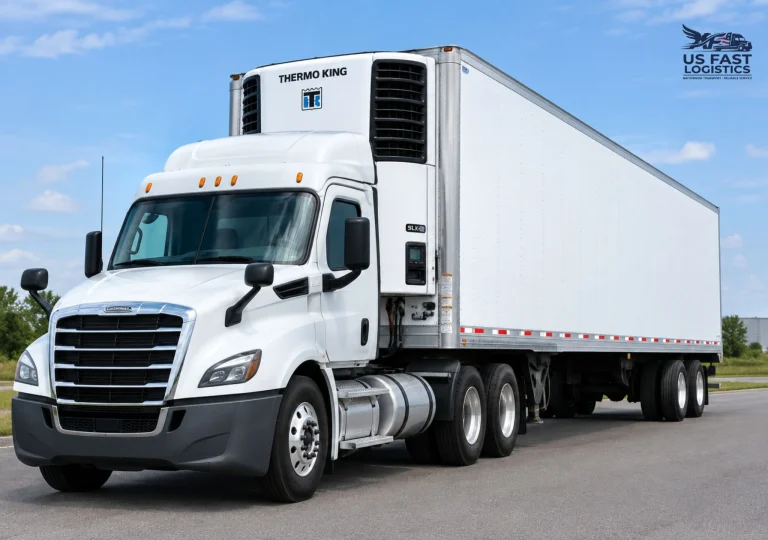
A refrigerated box truck, often called a reefer box truck, has an insulated cargo box and a cooling unit that holds a set temperature for the whole trip. It is the right choice for any load that spoils, melts, or loses potency when it gets warm.
Typical cold-chain freight includes:
- Fresh produce, dairy, meat, and seafood
- Frozen foods, usually held at 0°F or below
- Flowers and plants
- Pharmaceuticals and vaccines, many of which need 36 to 46°F
- Cosmetics, chocolate, and some chemicals
Two practical points are worth knowing. First, insulation and the refrigeration unit take up space and weight, so a refrigerated box truck carries a little less than a dry truck of the same length. Second, food shipments fall under the FDA’s Sanitary Transportation rule, so a good carrier pre-cools the box, records temperatures in transit, and can show you the log on delivery.
What freight moves by box truck?
Box trucks carry most general freight that fits on pallets or in cartons and stays within the truck’s payload. Common examples are:
- Retail and e-commerce goods, including furniture and appliances
- Food and beverage orders for restaurants and grocers
- Auto parts and industrial components on tight production schedules
- Medical supplies and equipment
- Trade show exhibits and event gear
- Building materials for small job sites
Loads that are very heavy for their size, such as steel coils or dense machinery, usually belong on a flatbed or a tractor-trailer instead.
How box truck freight rates are set?
Box truck freight is normally priced per mile or as a flat rate for the load. The quote moves with a handful of factors:
- Distance and lane. Busy lanes between major metros tend to price better than remote ones.
- Truck size. A 26 ft box truck costs more to run than a 16 ft box truck, though the cost per pallet is often lower.
- Urgency. Same-day and overnight expedited service carries a premium.
- Equipment. Liftgate service, inside delivery, and refrigerated equipment each add to the rate.
- Fuel and season. Diesel prices and peak retail or produce seasons push rates up.
Ask for an all-in quote that lists fuel surcharge, liftgate, and waiting-time charges, so two offers can be compared fairly.
How to choose a box truck freight provider?
A dependable carrier is easy to verify if you know what to ask for. Run through this list before you book.
- Check the authority. For-hire interstate carriers need an active USDOT number and operating authority. Both can be looked up free on the FMCSA website.
- Confirm insurance. Ask for a certificate showing liability and cargo coverage, and make sure the cargo limit covers the value of your goods.
- Match the equipment. State pallet count, total weight, and dimensions up front. Mention if you need a liftgate, pallet jack, straps, or a refrigerated box truck.
- Ask about tracking. Real-time location updates and a signed proof of delivery should be standard.
- Look at the safety record. Inspection and crash history is public, and a few minutes of checking can save a claim later.
Many shippers also work with a dispatch service or broker, who matches the load to a vetted truck and handles paperwork on both sides.
Conclusion
Box truck freight works because it is simple: one truck, one load, straight to the door. Pick the size that matches your pallet count and weight, add refrigeration or a liftgate if the freight calls for it, and verify the carrier before the truck rolls. Get those three things right and a box truck is often the fastest and most economical way to move a partial load in the USA.