Reefer
Our specialty is reefer freight, which means we’re experienced in transporting anything that must be maintained at a set temperature between pickup and delivery — whether that’s agricultural goods, meat, dairy, frozen foods, florals or nursery stock, or pharmaceuticals. A significant portion of our weekly dispatches focus specifically on reefer trucking.
If you could hire someone to take care of your logistics by doing all the back-end stuff needed to run a business, would you? We’re here to help. But instead of dealing with all the hassle associated with running a transportation company, we’ll go out and find the available freight ourselves. Then we’ll negotiate the best rate possible and get everything through the necessary paperwork steps before staying on the line until the product has been delivered and paid for. That means our drivers don’t have to waste valuable time worrying about finding loads when they should just concentrate on what they do best: drive, while making sure your stuff stays at the correct temperatures throughout its journey.
What is a Reefer?
A reefer is a refrigerated truck, trailer or container with its own cooling unit that holds cargo at a set temperature. The word is trucking shorthand for “refrigerated.”
The name changes with the place. In the US, drivers say they prefer the 53-foot refrigerated trailer. In the UK and Europe the same vehicle is a reefer lorry. At a port, reefer almost always means a refrigerated container.
Two things surprise people who are new to this freight:
A reefer heats as well as cools. In winter it keeps produce and beverages from freezing.
A reefer holds temperature. It is not built to pull heat out of warm product, so the shipper has to load the freight already cold.
What Is A Reefer Truck?
It’s a truck with an insulated (and usually refrigerated) cargo box. Refrigeration units keep freight at a certain temperature as it travels. Here are two types of reefer rigs:
Straight trucks (usually 16-26 ft), where both cab and cold box are mounted on the same frame. Usually do short, local/regional deliveries for stores & restaurants. Tractor-trailers (semi tractor + 53-ft refrigerated trailer). Most long-haul, temperature controlled freight in the U.S. is transported by these rigs.
What is a Reefer trailer?
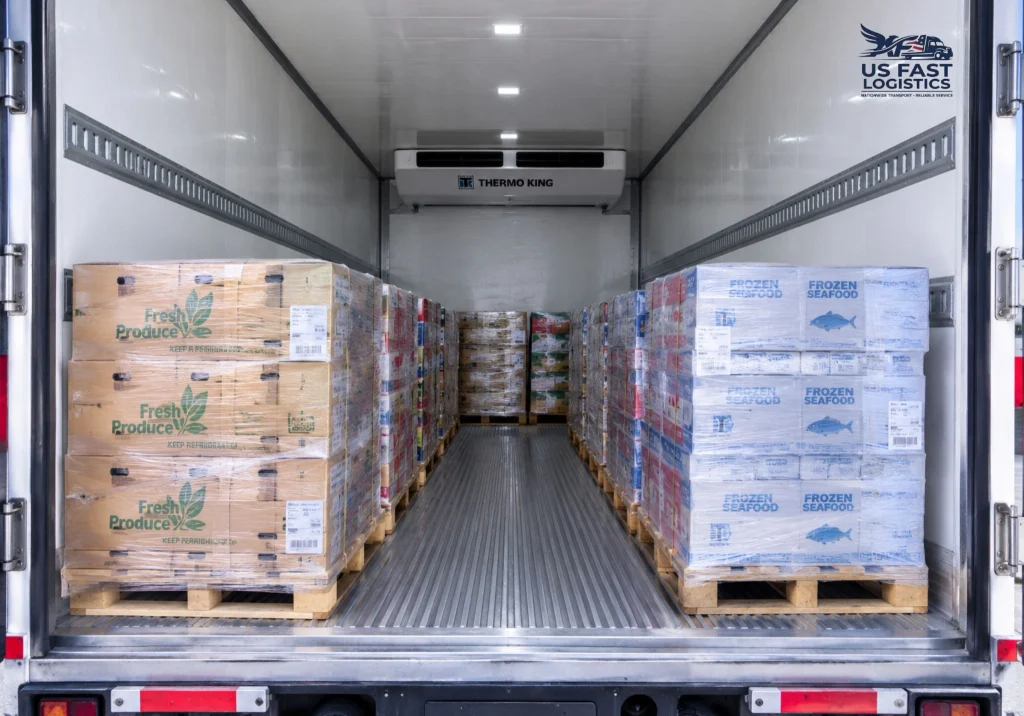
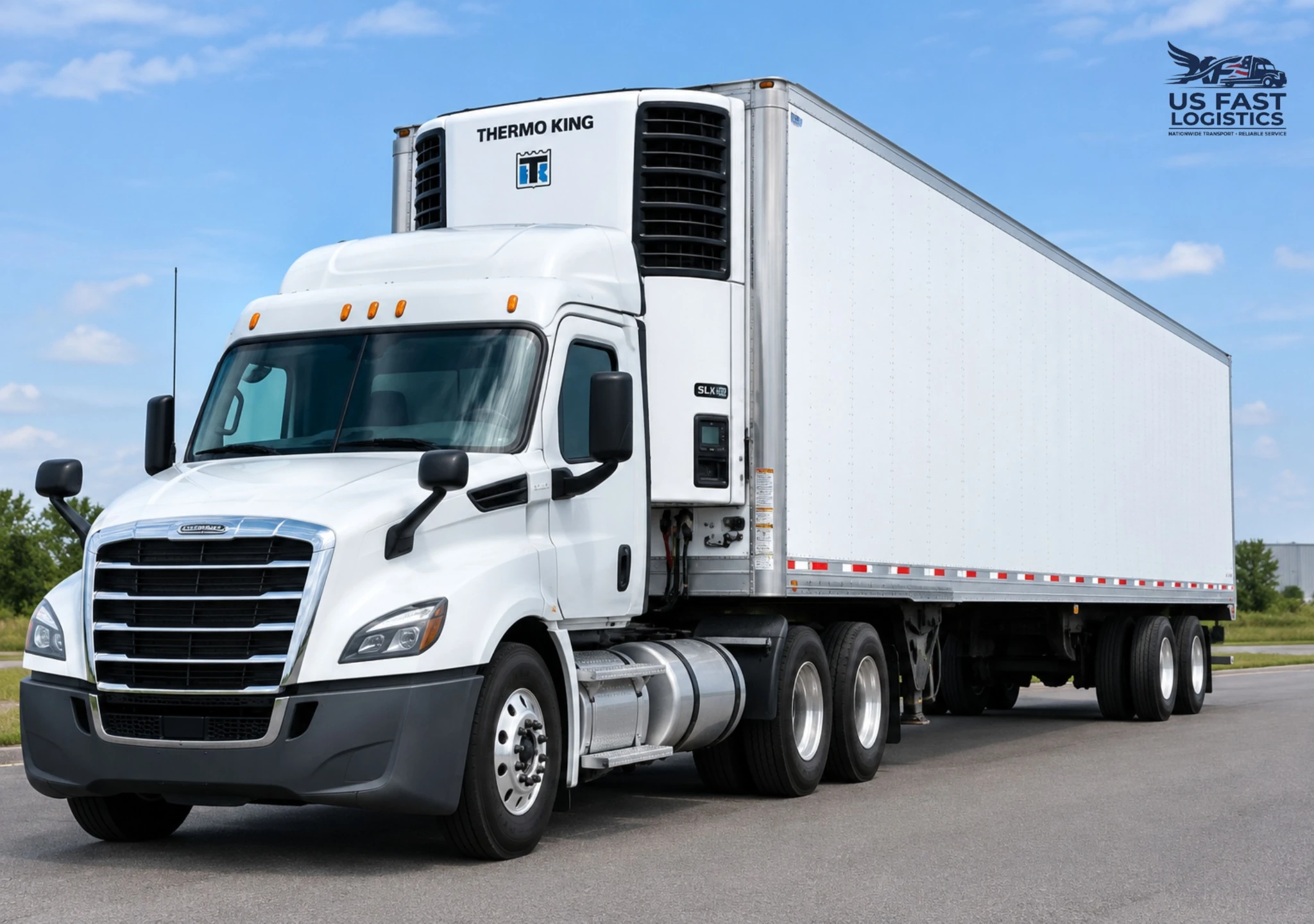
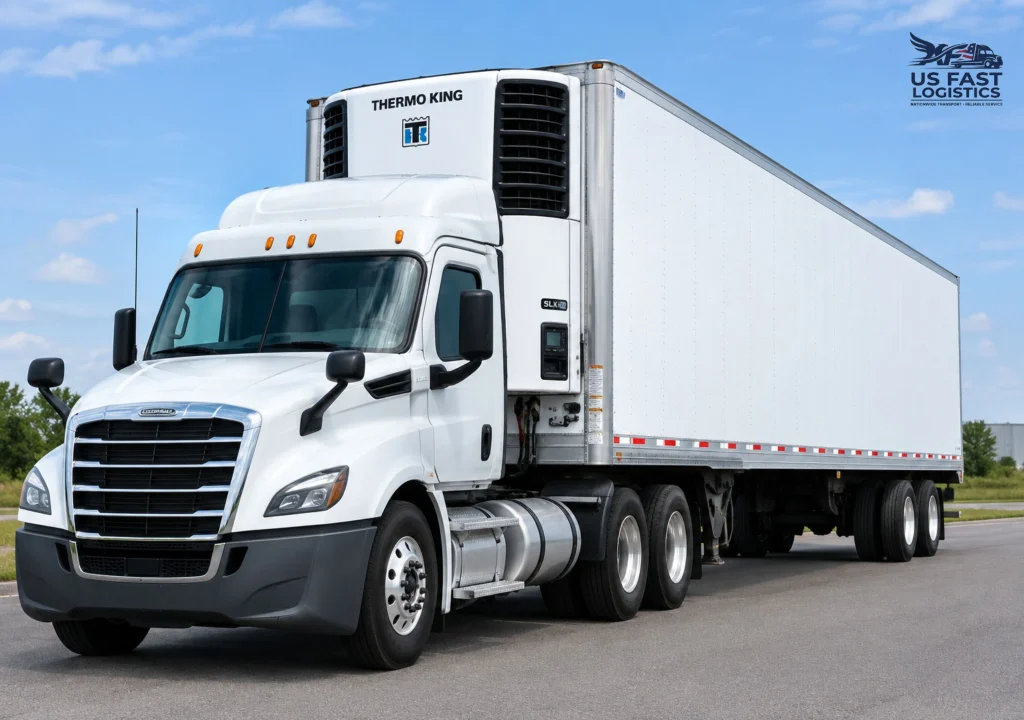
A reefer trailer is an insulated semi-trailer with a diesel-powered refrigeration unit mounted on its front wall. The unit has its own fuel tank, commonly around 50 gallons, so it keeps running when the tractor is shut off.
A standard 53-foot reefer trailer fits 26 pallets on the floor and legally carries roughly 42,000 to 44,000 lb. That is a little less than a dry van, because the insulation and the unit add weight.
A few features matter on every load:
Set point. The temperature the shipper wants, typically anywhere from -20°F to 70°F.
Run mode. Continuous keeps the unit running the whole trip. Cycle (start-stop) saves fuel but lets the temperature swing a few degrees. Fresh produce almost always needs continuous.
Airflow. Cold air travels down a ceiling chute and returns through the grooved floor. Freight stacked against the chute or the doors blocks it and creates warm spots.
Multi-temp. Some trailers use movable bulkheads to run frozen and chilled freight in separate zones.
Reefer containers and the 40ft Reefer
Reefer containers are refrigerated shipping containers built for ocean and rail freight. They are steel boxes with insulated walls and an electric cooling unit in the front end.
Unlike a trailer, a container has no fuel tank. It plugs into power on the ship and at the terminal. On the road it runs off a generator set (genset) clipped to the container or hung under the chassis.
Refrigerated containers come in two common sizes. The 40ft reefer high cube is the one we see most at US ports.
Spec (approximate)
| Spec (approximate) | Inside length | Inside width | Volume | Temperature range |
| 20ft reefer | 17.9 ft (5.45 m) | 7.5 ft (2.29 m) | 1,000 cu ft (28 m³) | -22°F to 86°F (-30°C to 30°C) |
| 40ft reefer high cube | 38 ft (11.58 m) | 7.5 ft (2.29 m) | 2,380 cu ft (67 m³) | -22°F to 86°F (-30°C to 30°C) |
Figures vary by manufacturer and shipping line. US highway weight limits, not the container rating, usually decide how much a truck can pull.
How reefer shipping works across sea and road?
Reefer shipping is the full cold chain: the ocean leg, the port and the truck. A reefer vessel is a ship built with refrigerated holds, long used for bananas and other fruit. Today most cold freight crosses the ocean in containers stacked on regular container ships and plugged into the ship’s power.
Our part starts at the terminal. We dispatch the truck that pulls the container off the port, checks the genset and set point, and runs it to the warehouse.
Containers used for storage
The same box works on the ground. A refrigerated storage container, sometimes sold as a cooling container, runs on site power as static cold storage. Farms, restaurants, event caterers and warehouses short on cooler space use them.
How we dispatch a reefer load?
We handle a reefer load in eight steps, from the first call to the paid invoice. Owner-operators and small fleets hand us the phone work so their trucks keep rolling.
Find the freight. We search load boards and call brokers we know for loads that match your lanes, your trailer and your home time.
Before you book ask yourself these questions:
What’s the commodity? Setpoint? Continuous or Cycle? Weight? How many pallets? What are the appointment times? Does your receiver charge a lumper fee? Or want a wash out?
Negotiate the Rate!
Does this rate include reefer fuel? Dead head miles? And does it take into account all the time they have to wait at the cold storage dock?
Handle the paperwork. Brokers set up packets, insurance certificates and the rate confirmation. We read the temperature terms line by line before you sign.
Prepare the trailer. The driver pre-cools to the set point, checks that the box is clean and odor-free, and tops off the reefer tank.
Check the product at the shipper. The driver takes a pulp temperature with a probe thermometer, writes it on the bill of lading and photographs the set point. Warm product gets reported to us before the doors close.
Track the trip. We send check-in updates to the broker and stay reachable if the unit throws an alarm or an appointment moves.
Close out and reload. We send the signed paperwork, bill detention and lumper charges, follow up on payment and line up the next load before the truck is empty.
Step 6 saves more claims than any other. A receiver who finds warm freight will blame the truck unless the paperwork shows the temperature at pickup.
Carrier reefer units and the equipment brokers ask about
A Carrier reefer is a refrigeration unit made by Carrier Transicold, one of the two brands on most US trailers. The other is Thermo King. Carrier builds the X4 and Vector series for trailers and the PrimeLINE series for containers.
We dispatch both brands. What brokers care about is the condition of the unit, so we keep these details on file for every truck we work with:
- Trailer year and unit model
- Engine hours on the unit and the date of the last service
- Whether the unit can download a temperature record for the trip
- Whether the trailer has a bulkhead for multi-temp freight
- Reefer breakdown coverage on the cargo insurance policy
A well-kept Carrier reefer or Thermo King unit with a clean service record wins better freight. Food shippers and pharmaceutical brokers often refuse older trailers outright.
What affects reefer rates?
Reefer freight usually pays more per mile than dry van, because the equipment costs more, the unit burns fuel and a temperature claim can cost the whole load. Five things move the rate.
Season. The produce season runs from spring into summer out of California, Texas, Florida and Georgia, and rates climb with it. The weeks before Thanksgiving and Christmas are also tight.
Lane. Loads into areas with little outbound cold freight pay more, because the truck may leave empty.
Temperature. Frozen freight burns more reefer fuel than chilled. Ice cream at -20°F is the hardest on the unit.
Stops and appointments. Multi-stop grocery runs and fixed appointment times cost hours, and the rate should reflect that.
Accessorials. Detention, lumper fees and washouts need to be agreed in writing before pickup, not argued over after delivery.
We price every load against these before we call it a good one. A high rate per mile means little if the truck sits two days waiting for a reload.
Keep your reefer loaded
If you run a reefer and spend your evenings on load boards, send us your lanes, your equipment details and your MC number. We will tell you what your trailer should be earning on those lanes and start booking.